ERP implementation
ERP systems rolled out properly: inventory, accounts, manufacturing, and purchasing in one place, configured to your workflows, with data migrated and people trained.

ERP, CRM, custom software, apps, and portals built around how you actually work. (Websites and digital marketing live on their own page.)

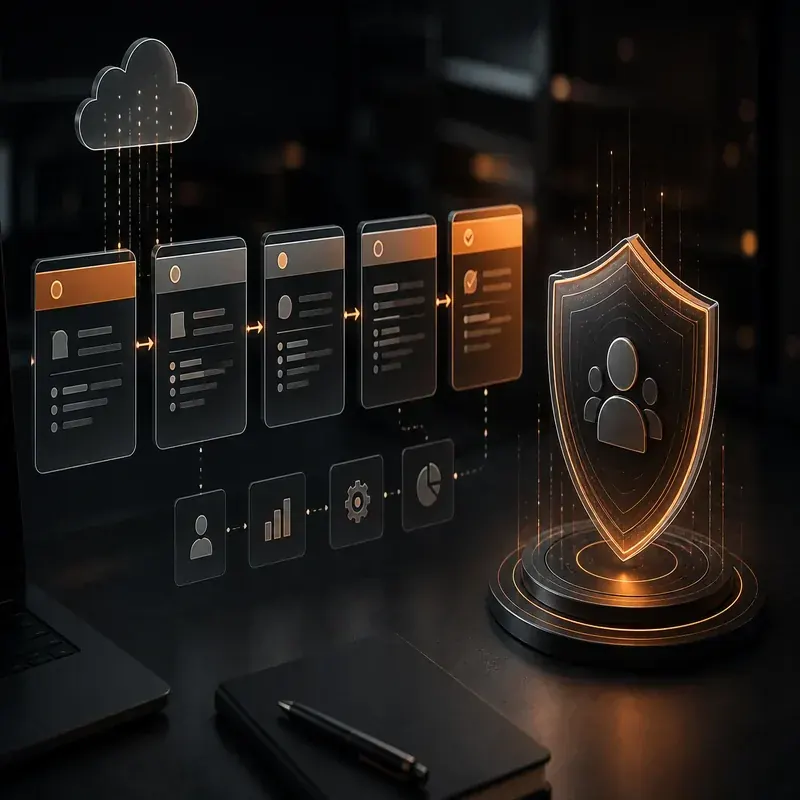
Evidence Adoption is the outcome
We configure the platform, migrate the data, test the workflow, and stay through go-live. The goal is not a better demo. It is a system your team can use in the middle of a real workday.
See systems work →Somewhere between "we manage in spreadsheets" and "we bought an enterprise system nobody can use" there's a middle ground: software that fits the way your business actually runs.
We build and implement that middle ground. Open-source ERP and CRM where they fit, automation where it pays for itself, and custom internal tools only where they genuinely earn their keep.
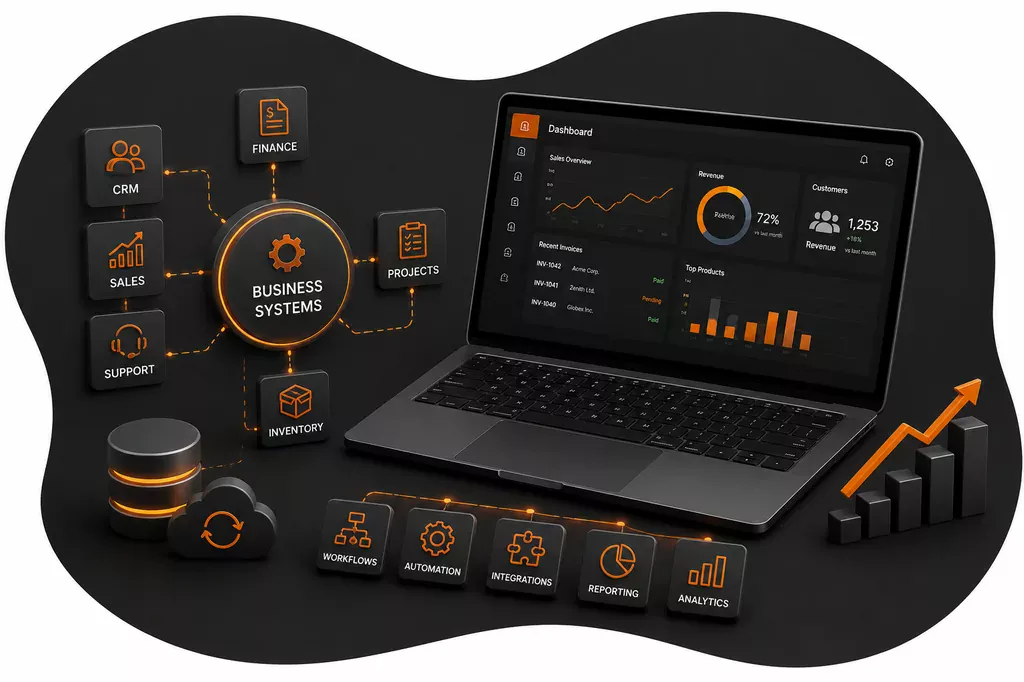
01 Six Kinds of Systems, One Rule: It Must Earn Its Place
ERP systems rolled out properly: inventory, accounts, manufacturing, and purchasing in one place, configured to your workflows, with data migrated and people trained.
Sales pipelines, follow-ups, and customer history that your team actually wants to use. Across eight CRM implementations we've learned that adoption, not features, decides whether a CRM pays off. So we handle configuration, UAT, and go-live until the team is actually using it.
Set up, customized, and wired into the rest of your stack. Implementation, permissions and user roles, reports and dashboards, and data migrated from whatever you use today. With the custom changes that make the tool actually fit.
Workflow automation that moves data between your tools, from invoices to approvals to reports, so your team stops copy-pasting.
Custom dashboards, approval portals, and client-facing apps that replace the manual workarounds your team has built around existing software.
When the process is genuinely unique, we build software around it, from one-off tools to full applications, maintained and documented.
02 Three Areas Where We Go Deeper
Your sales, operations, and finance data should live in one place. Not scattered across spreadsheets and half-configured tools. We implement and customize ERP and CRM platforms around how your team actually works, with migration, training, and go-live support built in.
When off-the-shelf software doesn't fit, we build around your process. Internal tools, client portals, and business applications maintained and documented like any other critical system.
Connect the systems your business already runs on. Move data between tools, eliminate copy-paste workflows, and automate the steps that slow your team down.
03 The approach
First we look at what's already installed but underused. Often a feature you already pay for just needs configuring.
If a standard tool fits most of the process, we recommend it and implement it: the fastest path to value.
When a standard tool almost fits, we customize it: CRM customizations, integration workflows, and platform extensions.
Only when the process is truly unique and no tool handles it well. We build it properly, document it, and maintain it.
04 Common questions
It depends on the process, not the brand. If a standard module fits 80% of what you need, we start there and extend it. Custom development is only recommended when the process is genuinely unique and worth the cost.
Yes. Data migration is part of every implementation, done carefully with validation at each step so nothing gets lost or silently corrupted.
We extend it. Platforms like Salesforce and Zoho can be customized, and workflow automation connects the gaps between the tools you already have.
Yes. Role-based training, documentation, and a 30-day adoption period with weekly check-ins are included in every implementation.
Tell us the one process that wastes the most time. We'll show you how we'd fix it, free.